11 Reasons You Need to Walk Your Way To Perimenopause Fat Loss

If you’re a busy corporate woman in your 40s who wants to lose belly fat, feel energised again, and stop dreading every mirror and Mondays, you, my friend, are in the right place.
Before I discovered the power of walking, I thought fat loss meant one thing: train harder, eat less, push through the exhaustion.
Spoiler alert, that did not work. I was stressed, inflamed, and running on caffeine and adrenaline. My body was fighting me, not rewarding me.
When I finally slowed down (literally), everything changed. Walking helped me reduce cortisol, balance my hormones, and finally see real, sustainable fat loss, without wrecking my nervous system in the process.
Now, instead of punishment-based workouts and all-or-nothing diets, I help women rediscover what their bodies actually need: calm, consistency, and connection.
If you want to support fat loss, hormone balance, and longevity, walking is your secret weapon.
Here are 11 reasons you need to walk your way through perimenopause fat loss.
1. It Lowers Cortisol (Your Belly Fat Hormone)
Let’s start with the big one. High stress = high cortisol = belly fat that won’t budge. Walking helps flip that hormonal switch.
When you walk, you activate your parasympathetic nervous system, your body’s natural “chill out” mode. Just 20–30 minutes a day helps lower cortisol, balance blood sugar, and reduce inflammation.
No burpees required.
2. It Improves Insulin Sensitivity
One of the biggest drivers of perimenopausal belly fat is blood sugar dysregulation. When your cells stop responding properly to insulin, excess glucose gets stored as fat.
Walking after meals, even 10 minutes around your house, improves your body’s ability to manage glucose. It’s like pressing the “metabolic reset” button daily.
3. It Supports Fat Burning Without Stressing Your Hormones
High-intensity workouts have their place, but in perimenopause, too much intensity too often can backfire, especially if you're not sleeping well. Your adrenals are already juggling fluctuating hormones and life stress, the last thing they need is another cortisol surge.
A combination of higher-intensity workouts WITH walking taps into fat as fuel while keeping your stress response calm. It’s efficient, gentle, and perfectly aligned with your body’s shifting hormonal landscape.
4. It Improves Sleep Quality (and Recovery)
Poor sleep sabotages fat loss faster than binging dessert at midnight! Walking during the day helps regulate circadian rhythms, reduce nighttime cortisol, and increase melatonin production.
Better sleep = better hormone balance = better results.
Bonus: evening walks are a fantastic way to unwind and transition from “go mode” to “relax mode”
5. It Boosts Mood and Motivation
If your mood’s been unpredictable lately (thanks, fluctuating oestrogen), walking is your natural antidepressant.
It increases serotonin and dopamine, your feel-good neurotransmitters, while giving you a sense of accomplishment. Even on hard days, a quick lap around the block can reset your entire mindset.
6. It Strengthens Your Heart, Bones, and Joints
Walking isn’t “just cardio.” It’s a full-body longevity investment.
It boosts circulation, supports bone density, and improves joint mobility, all crucial as oestrogen declines.
Every step is a signal to your body that says, “Stay strong. Stay mobile. Stay alive longer.”
7. It Helps Regulate Appetite and Cravings
Ever notice how a short walk after lunch kills the urge for that 3pm sugar hit?
That’s blood sugar balance at work, but there’s more.
Walking improves leptin sensitivity (your fullness hormone) and stabilises ghrelin (your hunger hormone).
Translation: you’re less likely to raid the fridge out of boredom or fatigue.
8. It’s the Easiest Habit to Stick To
No membership. No gear. No schedule stress.
You can do it anywhere, anytime, solo, with a friend, or with a podcast that makes you laugh-snort in public. When it comes to habit formation, ease equals consistency. And consistency beats intensity every single time.
9. It Works Beautifully With Strength Training
You don’t have to choose between weights and walking, the two are best friends.
Walking aids recovery, flushes out lactic acid, and keeps your muscles flexible between sessions.
Think of walking as your “active recovery” that amplifies the benefits of resistance work (and keeps inflammation low while you’re at it).
10. It’s Your Built-In Stress Detox
Walking gives you space, literally and mentally.
It’s time away from screens, responsibilities, and the constant noise in your head.
Many women find their best ideas, emotional releases, or “aha” moments happen mid-walk. It’s not just exercise; it’s self-therapy.
11. It’s the Easiest Way to Future-Proof Your Health
Walking isn’t just about fat loss, it’s about protecting your health through menopause and beyond.
Regular walking lowers your risk of cardiovascular disease, diabetes, dementia, and depression, four of the biggest postmenopausal health risks.
So yes, that daily walk might be the simplest, most powerful anti-aging strategy you’ll ever use.
Wrapping It Up
There you have it, 11 solid, science-backed reasons walking deserves a permanent spot in your perimenopause fat-loss plan.
When you combine steady walking with blood sugar balance, smart protein intake, and hormone-friendly habits, your body doesn’t just survive this phase, it thrives.
If you’re ready to start feeling the difference in just a few days, my 5 Day Kickstart will help you pair simple nutrition with realistic movement, no extremes, no stress, just results.
FAQ
Q: How much walking do I actually need?
Start with 20–30 minutes daily, aiming between 6,000–10,000 steps most days. You don’t need to hit 10k perfectly, consistency matters more than numbers.
Q: Is power walking better than slow walking?
A mix is great! Gentle strolls lower cortisol, while brisk walks challenge your cardiovascular system. Alternate based on your energy levels and add levels of difficulty walking hills and stairs.
Q: Can walking really replace workouts?
If you’re highly stressed or fatigued, yes. Walking can be your main form of movement for a while. Ideally, combine it with light strength training for best results.
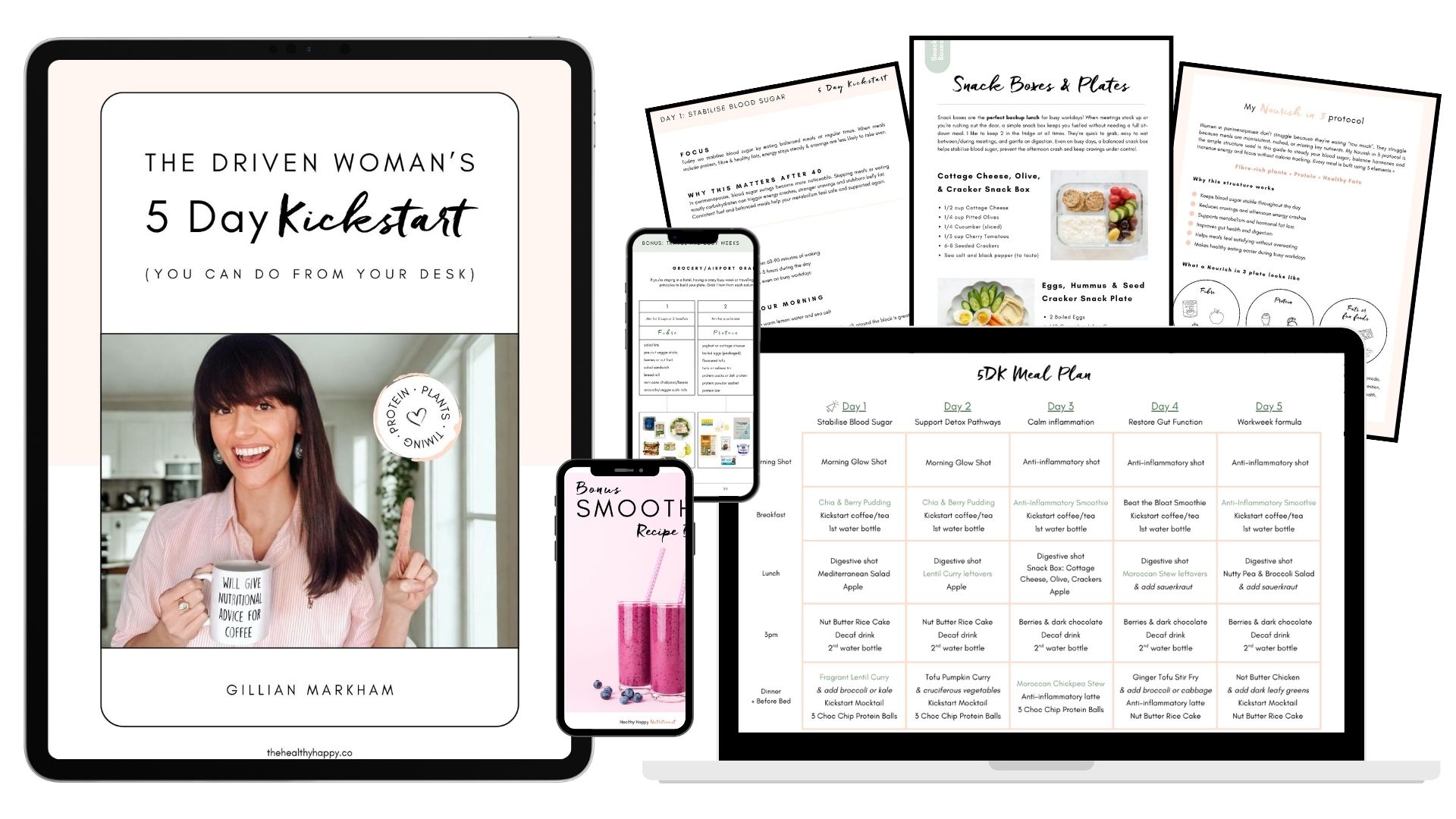
Feel better in 5 days!
If fat loss feels harder after 40, my 5 Day Kickstart gives you a simple raodmap to stabilise blood sugar, reduce inflammation and shift your body into a fat burning rhythm in just one week (without giving up coffee or dessert!)
Meet your Peri-Hype Girl!